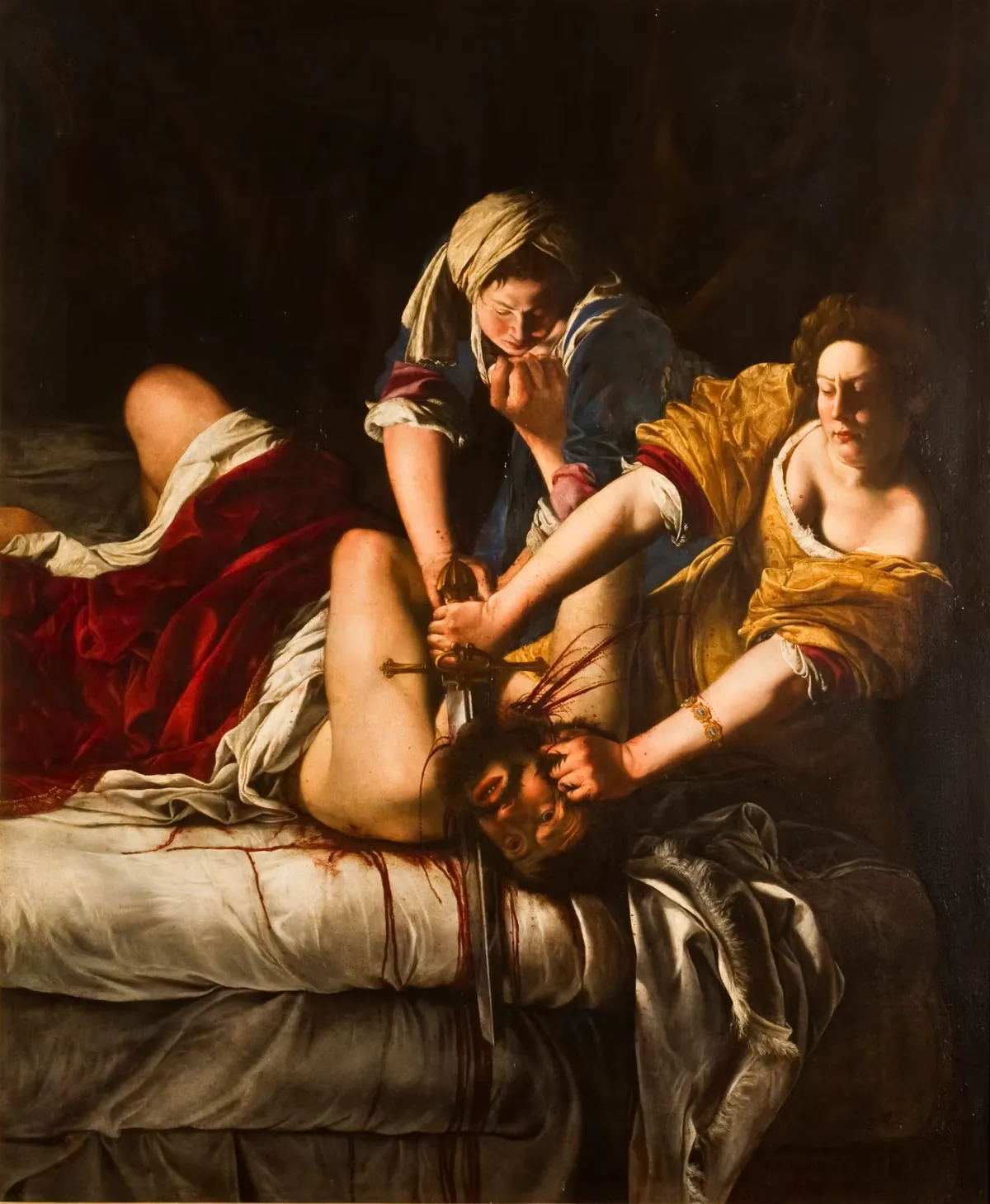
Judith Slaying Holofernes
by Artemisia Gentileschi, 1614-1620
This is picture that I cannot stop thinking about. The physical labor of revenge in Artemisia Gentileschi's masterpiece. Unlike Caravaggio's hesitation, there is no flinching here. This isn't a crime of passion, those are messy. This, is settling a debt - it's just a matter of time.
15 December 2025
Judith Slaying Holofernes by Artemisia Gentileschi
It might be the most visceral depiction of payback in Western art. Nothing is symbolic, nothing is politely implied. Revenge isn't a theme here - it's a physical act, carried out with grim resolve rather than theatre.
What grips me is the way the composition makes you work through the moment with them. This is the exact point where revenge stops being an idea and becomes labour: hands, weight, grip, resistance & consequence. The genius isn't just the violence. It's the cold certainty of it. The sense that the decision was made long before the blade ever touched skin.
For a while I had a line on my homepage: "A Lannister always pays his debts." I never meant it as money. I meant it as memory. As repayment. As the moment the world learns you are not to be handled carelessly.
Why Gentileschi's Judith and not Caravaggio's? Gentileschi doesn't flinch. In Caravaggio, there's a hesitation - Judith recoils from what she's doing. In Gentileschi, the scene is heavier, more committed, and Holofernes looks to be in far more pain. It's not just a beheading; it's a reckoning.