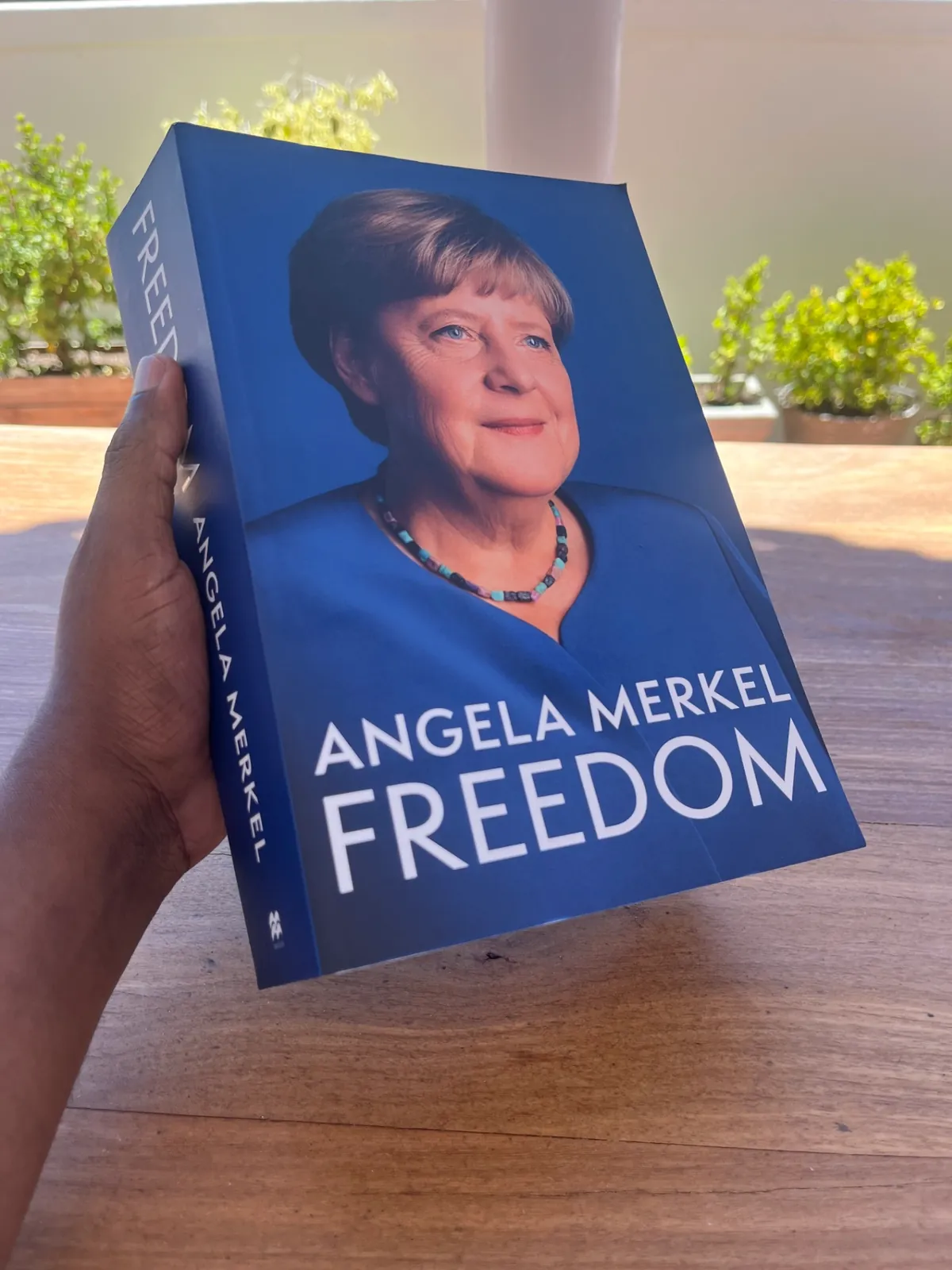
Freedom
by Angela Merkel
Chancellor Merkel,
Thank you for writing a memoir that resists the modern temptation to perform.
You are a politician, which means you are a polarising figure by definition. Many readers will arrive at Freedom already decided. Some will read it as vindication, others as evidence, others as provocation. I also have a constraint that shapes how I read and how I write: I never had to live under your policies. I observed your tenure from the outside, not from inside the consequences.
There is another constraint, even more practical. I live a life where my own words may one day be retrieved, screenshot, and replayed out of context. Today’s praise becomes tomorrow’s headline. Today’s critique becomes tomorrow’s enemy. Strategic agnosticism is not spinelessness. It is self-preservation, and it is discipline. It is the ability to separate a judgement about craft from a judgement about outcomes.
So this is not a political statement. This is a reading note.
Thank you for the quality of the writing.
The first thing that struck me is the tone. It is restrained, procedural, and quietly exact. The book does not chase applause. It does not hunt for confession. It does not try to charm the reader into agreement. It reads like a record written by someone who is more interested in being understood than being liked.
Thank you for the way you structure responsibility. The memoir does not present leadership as a sequence of heroic moments. It presents it as a series of constraints, trade-offs, and repeat decisions under time pressure. Meetings, briefings, drafts, phone calls, coalitions, compromise. The machinery of governance is not romanticised. It is exposed.
That exposure is the real value for a reader like me.
My curiosity was simple. What mattered to the person running Europe’s largest economy during her tenure. Not what mattered in slogans, but what mattered in practice. What did you prioritise when you had to choose. What did you treat as non-negotiable. What did you treat as reversible. What did you treat as dangerous. What did you believe your job actually was.
Your writing answers those questions indirectly, which is the more credible way to answer them. The priorities appear through repetition, through the problems you return to, through what you explain carefully, and through what you treat as settled. The reader learns your operating logic.
Thank you for the discipline of that.
The book also carries a distinctive temperament. There is a preference for clarity over theatre. There is an instinct to reduce uncertainty by preparing, consulting, verifying, then deciding. The prose mirrors that temperament. It is not trying to be luminous. It is trying to be usable.
Some readers will want more emotion. Some will want more moral positioning. Some will want more persuasion. The refusal to give those things is, to me, part of the craft. It keeps the work from becoming propaganda, even when the subject matter is inherently political.
This is what I walked away with. Not a verdict on your legacy, positive or negative, and not a claim to have experienced your policies directly. I walked away with a clearer sense of how a head of government can think on the page, how a life inside institutions can be narrated without spectacle, and how restraint can be its own form of authority.
Thank you for writing a memoir that increases the reader’s respect for seriousness, even if the reader remains strategically agnostic about the politics.
With respect,
Tendai