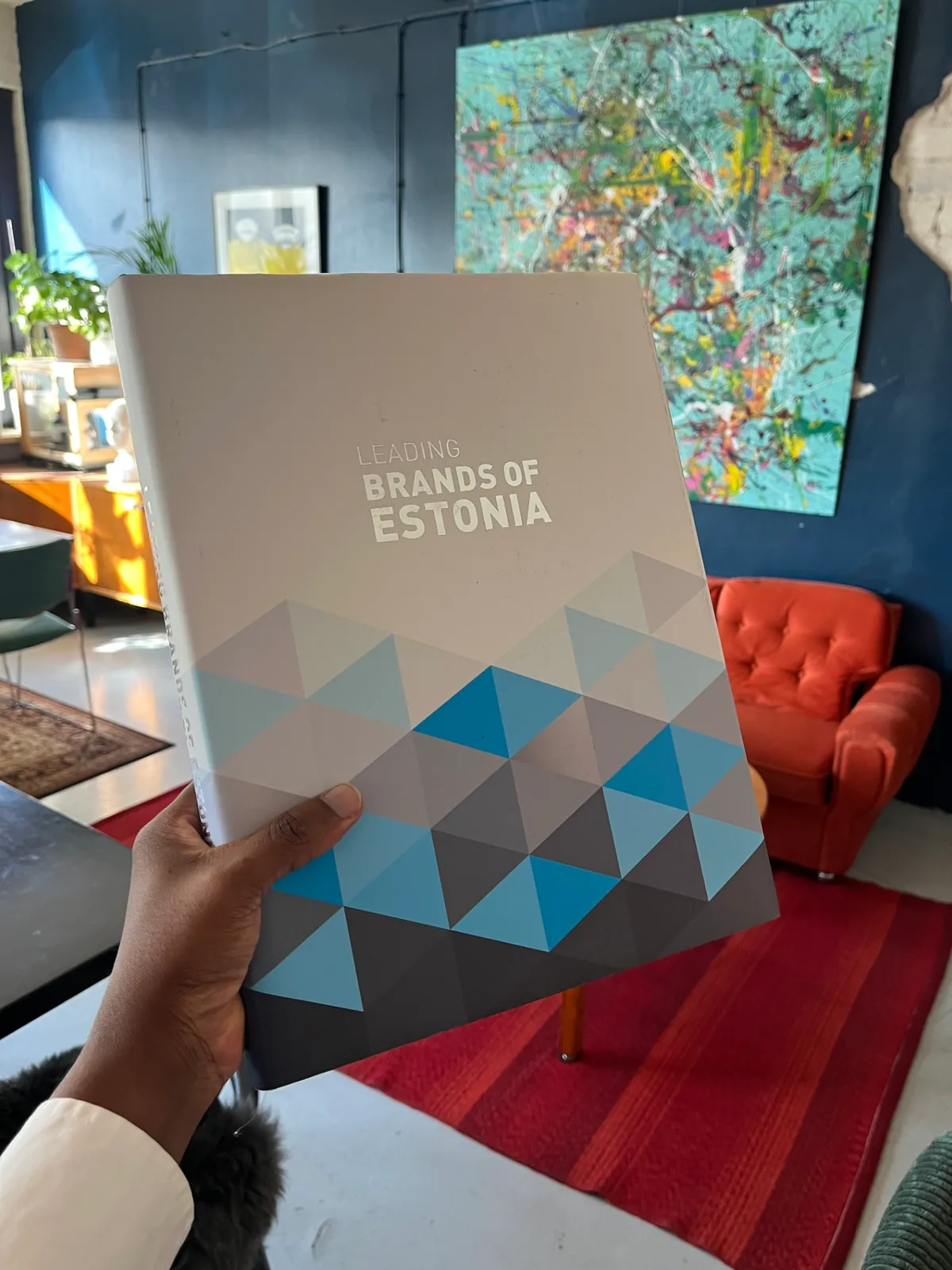
The Leading Brands of Estonia
by Estonian Chamber of Commerce
A trip to Estonia reveals an unsettling truth: when the logos disappear, so does your borrowed certainty. A letter on brands as trust, legibility, and quiet sovereignty.
Dear Estonian Chamber of Commerce and Industry,
Thank you for publishing a corporate directory that accidentally functions as a philosophy textbook.
I came across Leading Brands of Estonia in Tallinn while my host was graciously ordering lunch for us at the counter. I expected corporate portraits, tasteful layouts, and the usual "we are open for business" montage found in airport lounges. It is that. It is also something stranger. It made me realise that I do not just travel with a British passport. I travel with an internal trust system that collapses quietly the moment the logos disappear.
I recognised the export myths such as Wise, Pipedrive, and Skype. Then I hit the real Estonia. These are the brands that do not get panels at tech conferences: petrol stations, supermarkets, pharmacies. The invisible plumbing of a normal life. I did not recognise any of it. This meant I had to do something I have not done in years: I had to think while buying toothpaste. That tiny friction is the lesson. It is mild paranoia dressed up as "being careful."
A good brand is not a logo. A good brand is a promise that has survived contact with reality. People say "you are just paying for the name" as if they have uncovered a Ponzi scheme. They have simply described the product. The name is what you pay for since the name carries consequences: standards, refunds, audits, and regulator attention. In low-stakes categories, that looks like taste. In high-stakes categories, it is safety. Nobody wants experimental jazz in their antibiotics.
Here is the belief update I took from Estonia. National identity is not only culture. It is the average reliability of anonymous transactions.
When a society works, you can buy fuel, medicine, baby formula, or train tickets without knowing anyone. You can trust the system while remaining a stranger inside it. That trust is not poetic. That trust is civilisation.
Brands are one of the most underestimated pieces of that machinery. They turn uncertainty into probability. They let strangers cooperate at speed. They are private institutions dressed in commercial clothing. The receipt becomes a tiny certificate that says: this place keeps its promises well enough that nobody needed to negotiate with a human to get fair value.
That is where the book becomes quietly profound for a small country. Estonia is not just selling companies. It is selling legibility. A million people on the edge of Europe cannot afford to be vague about competence. Legibility becomes a form of sovereignty. You do not only defend a country with soldiers. You defend it with systems that work well enough that citizens stop living tactically.
There is a moral tension here worth stating plainly. Brand worship is still embarrassing. Status theatre is still a social disease. Yet there is a grown-up truth hiding underneath the cringe: earned brands reduce harm. They reduce the cognitive load of daily life. They create a world where a person with no connections can still buy decent things and expect them to function.
The dividing line is earned promise versus unearned promise. The former is reputational capital built through consequence. The latter is marketing wearing a suit. This book, at its best, is a catalogue of names that have had to earn their place in the nervous system of a country.
I arrived thinking brands were mostly decoration on capitalism. I left thinking something colder and more useful. Brands are one of the ways a nation makes itself safe to live inside. When they are real, they are the civilian flags we rely on every day without noticing we are saluting them.
With respect,
Tendai Shamu